
Mercedes-Benz EQS vs. BMW i7: Making the Luxury EV Choice
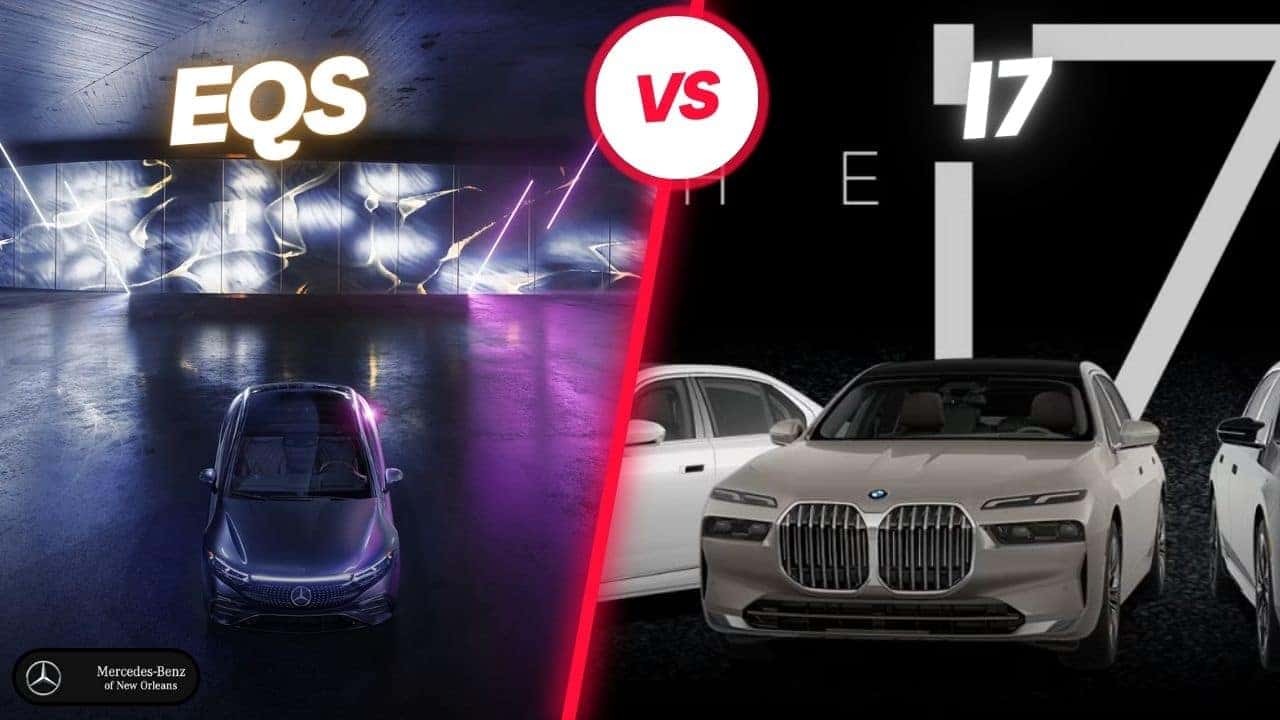
When you’re considering the pinnacle of luxury electric vehicles, the Mercedes-Benz EQS and BMW i7 undoubtedly make the list. In this comparison, we’ll explore these two remarkable cars, helping you make an informed decision that aligns with your preferences.
Performance and Powertrain
Engine Specifications
| Specification | Mercedes-Benz EQS | BMW i7 |
| Horsepower | Approximately 329 horsepower* | 449 horsepower* |
| Torque | Around 406 lb-ft* | 549 lb-ft* |
*=dependent on trim level
Both vehicles offer impressive power, but the BMW i7 does win in horsepower and torque.
Acceleration and Handling
The EQS and i7 offer exhilarating acceleration and precise handling. The unique driving dynamics of each vehicle cater to different driving preferences. BMW enthusiasts may appreciate the brand’s signature sporty feel, while Mercedes-Benz emphasizes a serene and comfortable ride.
Range and Charging
Electric Range
Mercedes-Benz EQS: 350 miles
BMW i7: 301-321 miles
While both cars provide a substantial electric range, the Mercedes-Benz EQS slightly edges with its mileage. Be sure to keep in mind that it’s essential to consider how your daily driving aligns with these figures.
Charging Infrastructure
The availability of charging infrastructure and the convenience of charging times are vital. Mercedes-Benz and BMW boast extensive charging networks, ensuring you can power up effortlessly. Special features like faster charging capabilities may influence your decision.
Interior Comfort and Technology
Passenger Seating and Materials
Both vehicles offer plush interiors and quality materials. The EQS excels in spaciousness, offering generous passenger seating, while the i7 provides a sophisticated and cozy cabin.
Infotainment and Connectivity
The infotainment systems are user-friendly in both cars. Mercedes-Benz EQS and BMW i7 offer cutting-edge technology features, seamless connectivity, and smartphone integration.
Infotainment Comparisons
| Feature | Mercedes-Benz EQS | BMW i7 |
| Music | Integrated Steaming Services | Bowers & Wilkins Surround Sound System |
| Instrument Cluster | 12.3 in Cluster | 12.3 in Cluster |
| Main Screen | 17.7 in OLED Touchscreen | 14.9 in Curved Touchscreen |
| Passenger Screen | 12.3 in Passenger Display | No Passenger Display |
Safety and Driver Assistance
Standard and Advanced Safety Features
Both cars come equipped with standard safety features that meet the highest industry standards. Additionally, advanced driver assistance systems enhance safety during your journey.
Pricing and Ownership Costs
Starting Prices
Mercedes-Benz EQS: Starting at $104,400
BMW i7: Starting at $105,700
**Price variations based on trim levels and optional features can influence your final decision.**
Ownership Costs
Consider maintenance, insurance, and potential incentives or tax credits for electric vehicles. These factors can significantly impact your overall ownership experience.
Resale Value and Reliability
Resale Value
The expected resale value of both vehicles depends on various factors that can significantly impact their worth over time. These factors encompass a range of considerations, including economic conditions, the make and model of the car, its class and body style, mileage driven, transmission type, and the overall condition of the vehicle. Economic factors, such as inflation rates and consumer demand for certain types of vehicles, can influence resale values. Additionally, vehicle make and model play a pivotal role, as some brands are known for retaining their value better than others.
Reliability
Reliability is crucial when deciding between the Mercedes-Benz EQS and BMW i7. To evaluate the long-term performance of these luxury electric vehicles, it’s essential to delve into reviews and gather user feedback. Real-world experiences from owners can provide valuable insights into how these cars hold up over time. Look for common issues or praises regarding factors like build quality, electronics, and overall durability.
In addition to user feedback, it’s wise to explore any unique warranty or support programs offered by Mercedes-Benz and BMW. Both manufacturers provide comprehensive warranties for their vehicles, but the specifics can vary. Pay close attention to warranty duration, coverage for key components like the battery, and any maintenance plans that might be included.
Personal Preferences and Lifestyle
When deciding between the Mercedes-Benz EQS and BMW i7, it’s crucial to consider how each vehicle complements your specific needs, lifestyle, and driving habits. Your daily commute plays a pivotal role in this decision. If you have a long daily commute, the electric range of both vehicles becomes paramount. The Mercedes EQS, with its spacious and luxurious interior, might be the ideal sanctuary for a daily drive. In contrast, the BMW i7’s sporty performance and handling might add excitement to shorter commutes or leisurely drives.
Other factors to consider are your family size and recreational activities. If you frequently embark on road trips or outdoor adventures, the electric range and charging infrastructure for both vehicles should be evaluated. The BMW i7’s sporty handling might make it a more engaging choice for scenic drives, while the Mercedes-Benz EQS’s emphasis on comfort and technology could enhance your road trip experience.
In conclusion, the Mercedes-Benz EQS and BMW i7 represent the zenith of luxury electric vehicles. Your choice depends on your priorities. If you seek a serene and spacious ride, the EQS may be your ideal companion. On the other hand, if you crave sportiness and agile handling, the i7 could be the right fit. Consider all the factors we’ve discussed and let your personal preferences guide you. Luxury awaits in either choice.
0 comment(s) so far on Mercedes-Benz EQS vs. BMW i7: Making the Luxury EV Choice